Private review Chapter excerpt edition Ordering is not yet available

A practical book by Richard Summerlin

The People Who
Make It Look Easy

The invisible work behind every smooth moment, and how to do it on purpose.

For the person everyone turns to when the plan changes. Eight tools to get the right people in sync, handle the handoff, and show up when it matters.

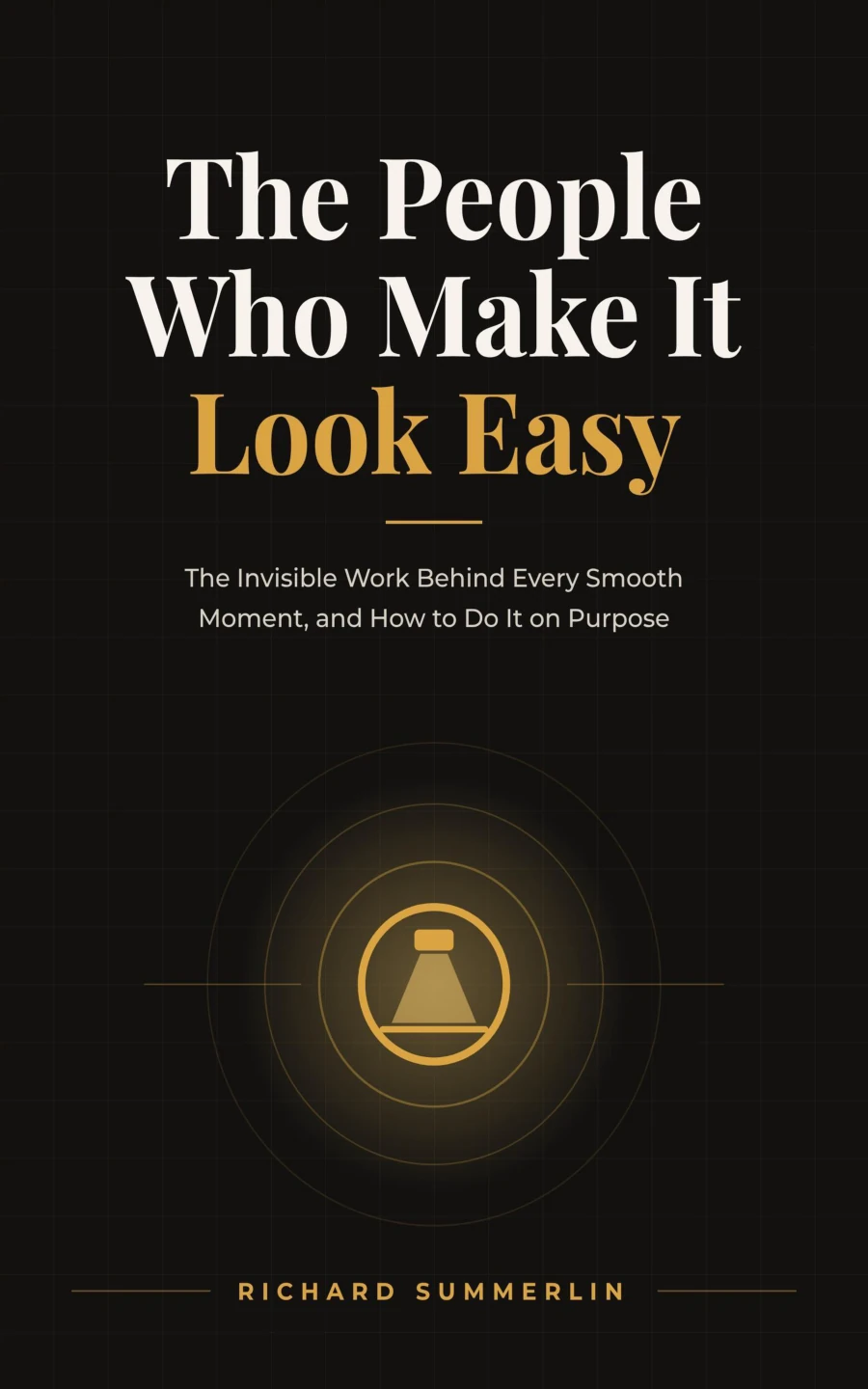
Black-and-gold cover of The People Who Make It Look Easy by Richard Summerlin

The work nobody sees

The line wrapped around the building before the doors opened.

Richard was already inside with his friend Tone, watching him walk the DJ through the night. Hundreds of fans would see the show. The DJ needed to know what happened next. That difference is the first lesson in the book.

Richard saw it again in his mother’s color-coded whiteboard and in the boardrooms where he runs live broadcasts. The details change. The work is the same: decide what matters, give people what they need, and make it easier for the next person to act.

An excerpt from Chapter 1

Write the run of show

Go back to that empty room for a minute. The line is wrapped around the building. And Tone, in the CEO haircut, is walking his DJ through the night.

When the interviewees come up on stage. When the raffle starts. Where the camera people will be and where the interviews happen. When the players join.

What I noticed was who he was telling. The DJ controls what the whole room hears. If he doesn’t know the raffle is coming, he’s mid-song when Tone needs the mic. If he doesn’t know the players are about to walk in, there’s no moment for them to walk into. Tone could carry the whole night in his head, and plenty of MCs probably do. But the night didn’t only depend on Tone. It depended on the one other person whose next move was tied to every moment on that list.

That’s a run of show. In live production, it’s the document that says what happens, when, who’s responsible, and where. On a broadcast, mine is written down and timed. Tone’s was a conversation before the doors opened. Same job. Everyone who has to act knows what’s coming before it comes.

Audience and crew

Every plan has two groups of people around it. The audience is who the plan is for. The crew is who makes it happen. The fans were the audience. The DJ was crew. When the performer ran long and Tone split the raffle, the crowd never heard about it, and they shouldn’t have. The DJ had to know.

That’s most of what “make it look easy” means. It doesn’t mean hiding the work from everyone. It means keeping the scramble away from the audience and making sure the crew knows everything. You’ll see that line all through this book. On the broadcast, the audience saw speakers with working mics, and my crew heard every change. When I had RJ’s flight date wrong, he was the audience. He didn’t need my stress. But on the night I came home beat, he was crew, and letting him see it is what let him help. The people closest to you aren’t always the audience. Often they’re the crew.

So before you write a run of show, ask who’s who. Then give the crew the list.

Try a tool from Chapter 1

Write the Run of Show

Pick one thing happening this week that involves someone else. Give every action a time, a person, and a place. Then fill in the column that people usually skip: what happens if the plan changes?

Keep the live plan in one place the crew can open. Name the person who updates it before you need them to.

Illustrative example Family Saturday

When
9:00 a.m.
What
Practice
Who
Dad drives
Where
Field 2
What if it changes
If Dad is late, use the carpool confirmed on Friday.

One live plan. One person owns the update.

Inside the book

When the plan changes, know what to do next.

Before the doors open

Make the live plan easy to find. Work backward from the moment someone needs to be ready without you.

When the plan changes live

Make a handoff that lands, signal when you need help, and find out what an urgent request actually needs.

Make it easier for the next person

Find the work only you can do, give requests one home, and teach someone else to take over without taking the work back.

One digital bundle

Read it. Then try it.

The ebook and Companion Guide come together. Read the stories, then use the worksheets to make the next hard thing run more smoothly.

Black-and-gold ebook cover

Included · Ebook PDF

The People Who Make It Look Easy

Eight chapters with stories from work and home, plus a tool to try at the end of each chapter.

Black-and-gold Companion Guide cover

Included · Companion Guide PDF

The Companion Guide

Printable worksheets, worked examples, and instructions for setting up the tools digitally.

Private preview: Price and checkout are not live. The print edition will be separate when its purchase link is ready.

Portrait of Richard Summerlin

About the author

Richard Summerlin

Richard has spent his career behind the scenes, from the U.S. Marine Corps to supporting executives and running live broadcasts. He’s a father and the author of Resilience Engine. He wrote this book to share what he learned from people who know how to make the next hard thing a little easier.